What do these road signs show?
Answer options
Explanation
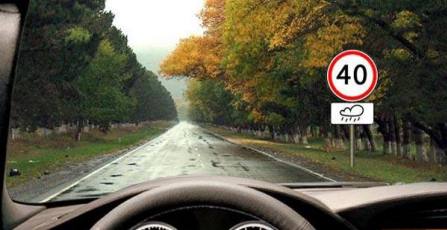
While the road surface is wet, the maximum speed is 40 km/h.
A speed limit sign, when a conditional plate is fitted beneath it, is valid only in that condition. Here the condition is that the road surface is wet; so while the asphalt is wet the ceiling is 40 km/h, and as soon as the road dries the general limit for that stretch returns. The technical reason for this figure is friction: on wet asphalt the tyre's grip coefficient falls sharply and the braking distance can reach twice its dry value; at higher speed a film of water is trapped beneath the tyre and the wheel slides on water. By reducing speed you both give the tyre time to expel the water and keep the stopping distance within your sight line. Memorise the figure 40 as it is, and note that it is a ceiling, not a speed you must travel at exactly.
In Armenia's autumn and spring, especially on mountain roads and passes, this combination of signs is often seen.
• It contains two errors: the plate's condition is a wet surface, not ice, and 40 is the permitted ceiling, not a speed the driver is obliged to hold exactly.
Topic
The official Armenian theory exam has 20 questions. You may make at most 2 mistakes. Start mock exam
Related questions
- Is it allowed to enter the area marked with this sign when making a right turn?
- Which of the following signs prohibits traffic with a smaller space than the one shown on the sign?
- This road sign:
- This road sign shows:
- At what distance from the location of the dangerous part of the road are these signs placed in the settlements?
- Which of the following signs obliges to give way to vehicles entering or approaching a narrow section of the road in the opposite direction?
- Which of the following signs warns of approaching an intersection of equal roads?
- These signs allow traffic: